
Step inside
the scan.
A native spatial viewer for CT, MR, PET, and NM studies — plus NIfTI and NRRD volumes.
Born on Apple Vision Pro. Now on iPad and iPhone.
 Vision Pro · iPad · iPhone
Volumetric medical imaging has always been three-dimensional. Now the interaction is too — view and measure freely in your own physical space.
One experience,
three platforms.
Slice through volumetric studies in 3D — wherever you are. Examples shown with a CT case.


Two ways to view and measure.
Tracked auto-slicing
The oblique plane follows your viewpoint — head-tracked on Apple Vision Pro, device-tracked on iPad and iPhone. Move yourself, and the cut moves through the anatomy.
Fixed manual-slicing
Lock the plane in place and drag it through the volume by hand — for slow, deliberate positioning and repeatable views.
Mark & measure
View and measure in one motion — no translation layer between intent and action. Computed on-device from the volume's own metadata, and fully exportable to CSV for analysis.
Every modality, in full color.


Imported via DICOM — plus single-file NIfTI and NRRD volume import, for education, research, and workflow exploration. True to its name, VoxelVision is built to give you full sight of the voxel — carrying volumetric studies across the imaging workflow, from clinical DICOM acquisitions to processed NIfTI and NRRD research volumes, into a single spatial view.
Measured against
known geometry.
A geometric-validation study characterized VoxelVision's pose-tracked double-oblique multiplanar reformation against reference phantoms — testing distance, angle, path, and perimeter across a three-tier validity gradient, on head-mounted and handheld platforms.
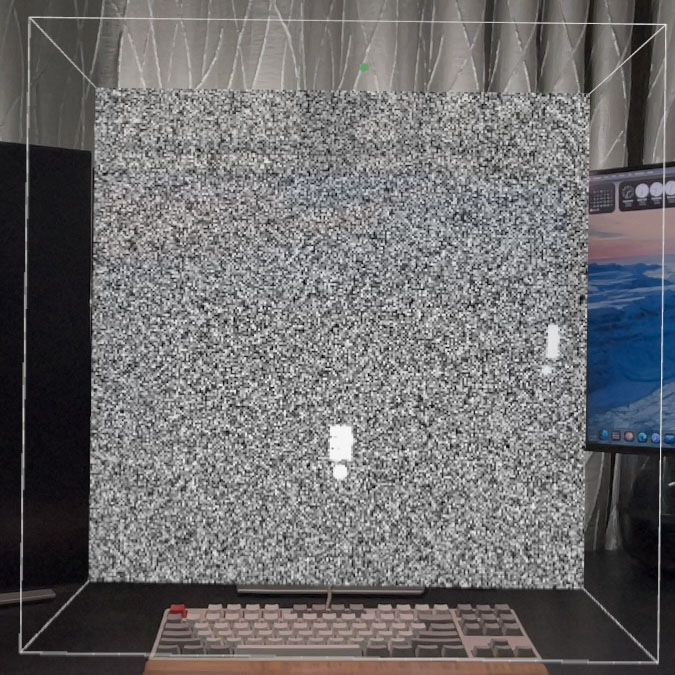
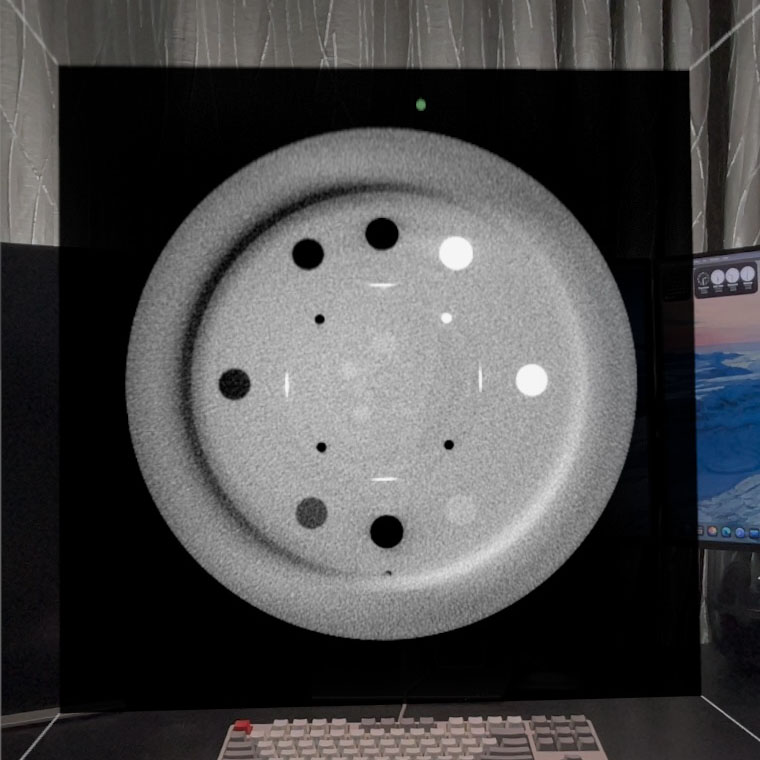
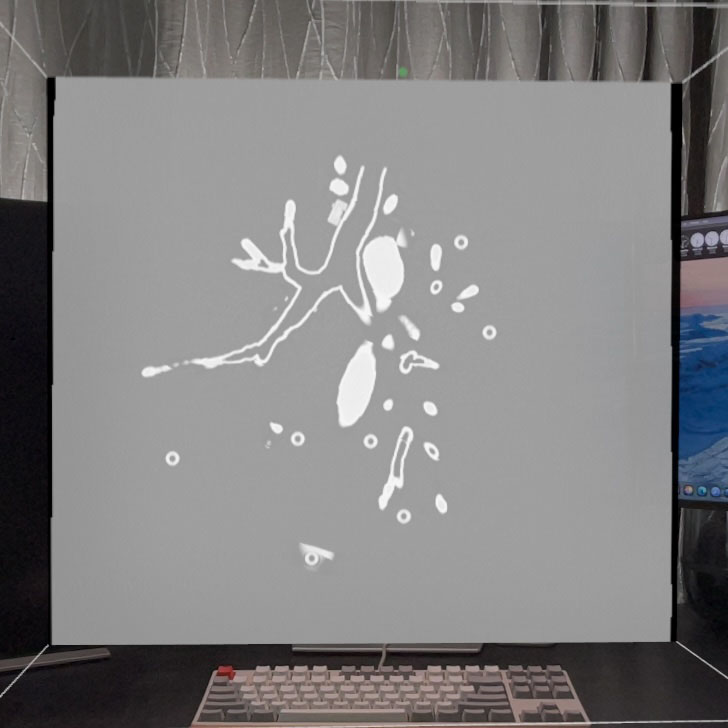
Across 570 blinded measurements on 100 single-target volumes, results were statistically equivalent across voxel spacing, platform, and session re-entry. Characterized with a single trained operator on phantoms with known reference geometry; generalization across independent operators and extrapolation to clinical anatomy define the boundary for subsequent study. VoxelVision is not a certified medical device.
Manuscript currently in peer review · full citation with doi to be added upon publication.
Open code & data — analysis code, measurement records, and per-tier execution lists: github.com/mingweicui/VV-measurement-validation (MIT). Author-built phantom datasets (MCVV-SPH, MCVV-RPH) archived on Zenodo (CC-BY-4.0).
Nothing leaves your device.
All imaging data is processed and stored on-device, in read-only mode. No cloud upload. No analytics. No data collection. No ads.
Bring the interaction up to the data.
Free to download. Oblique Plane Viewer available as an in-app purchase.